Trill.
tr above a note, often with a wavy line: alternate quickly between that note and the note above it.
Also called tr, shake, trillo, trille, Triller.
What it means
A trill is a rapid, repeated alternation between the written note and the note above it in the scale. It decorates and sustains a note, and in older music it often marks a cadence. In British English it’s sometimes called a “shake”.
How it’s written
The letters tr above the note, often followed by a wavy line that shows how long the trill lasts. A small accidental above the tr (a sharp, flat or natural) changes the upper note. Without one, the upper note follows the key signature and any accidentals in the bar.
Small grace notes after the trilled note show how it ends, usually a turn: the note below, then back to the main note.
Where does it start?
This is where style matters.
| Era | Usual start | On the beat? |
|---|---|---|
| Baroque | The upper note | Yes |
| Classical | Usually the upper note, though practice varies | Usually |
| Romantic and later | The main note | Yes |
Small grace notes before the trill can show the start you want. When you’re not sure, ask your teacher; editions and scholars don’t always agree.
How it’s played
- Speed: fast and even, but it doesn’t have to be as fast as possible. A slow movement can have a slower, more expressive trill, sometimes starting slower and speeding up.
- Ending: land on the main note, and if there’s a written turn (the grace notes), play it at the trill’s speed into the next note.
- Winds: many notes have special trill fingerings that make the alternation easier and better in tune; a fingering chart for your instrument lists them.
- Strings: the upper finger taps lightly while the lower one stays down. Keep the bow even.
- Piano: alternate fingers that feel strong on that pair (often 2 and 3, or 1 and 3), from a relaxed hand.
Common confusions
- Tremolo. A tremolo repeats the same note quickly (on strings, with slashes through the stem) or alternates between notes further apart. A trill is always with the neighboring note.
- Mordent. A mordent is a short, single alternation; a trill keeps going.
- The wrong upper note. Check the key signature and accidentals in the bar.
Marking it on your score
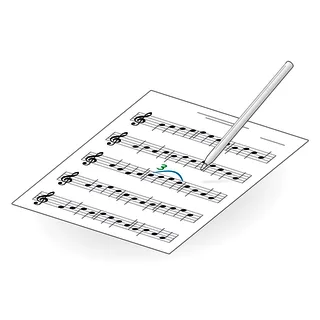
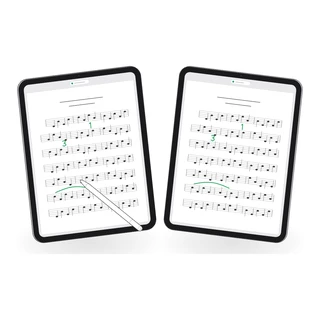
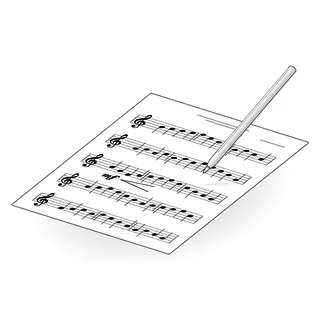
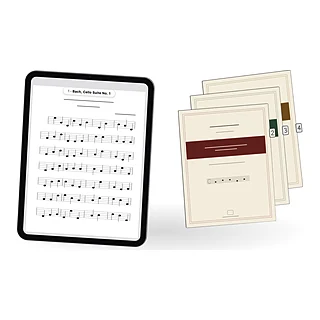
Write the upper note in small above the tr, or the trill fingering you use, so you don’t have to work it out each time. In Marcato, Trill is in the stamp tool’s Ornaments group; place it over the note where the trill starts, and size it with the lasso to match the print.