Staccato.
A dot above or below the note: play it short and detached from the next one.
Also called staccato dot, staccati, stacc..
What it means
Staccato is Italian for “detached”. A staccato note is shortened so there’s a clear space between it and the next note. It says nothing about loudness: a staccato note can be soft or loud.
How short depends on the tempo and the style. A common starting point is about half the written value, so a staccato quarter note sounds roughly like an eighth note followed by an eighth rest. In a slow movement, staccato is often gentler and longer; in a fast one, crisper.
How it’s written
A small dot directly over or under the notehead, on the side away from the stem. A whole passage can be marked with the word staccato or stacc. instead of dots on every note. Sempre staccato means keep going that way.
How it’s played
- Winds and brass: a light tongue to start each note and a quick, clean release. Stop the note by stopping the air, not by slapping the tongue back, which you can hear.
- Strings: depending on tempo and style, an off-string bounce (spiccato) or a short on-string stroke that stops the bow. Staccato dots under a slur on strings usually mean several short notes in one bow.
- Piano: release the key quickly. Light staccato comes from the fingers, heavier staccato from the wrist or arm.
- Voice: short, separated syllables with the breath supported, not chopped.
Common confusions
- The dotted note. A dot to the right of a notehead makes the note longer by half its value. A dot above or below the notehead is staccato. Placement is everything.
- Dots under a slur. On keyboard and winds, this usually means portato, a gentle half-separation. On strings, it’s often a slurred staccato.
- Staccato means quiet. It doesn’t. Short is not the same as soft.
Marking it on your score
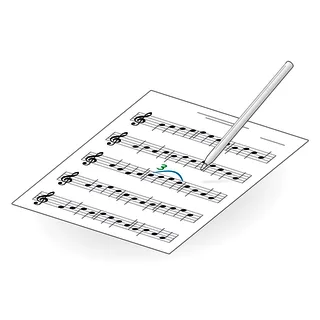
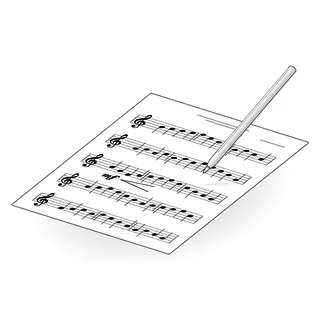
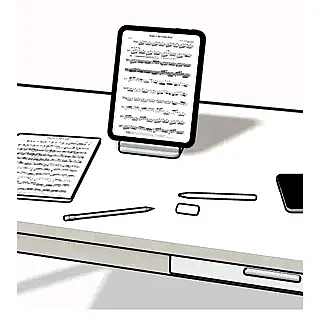
Players often add staccato dots where a passage is printed without articulation and the section has agreed to play it short. Mark them neatly on the notehead side, because a stray dot next to the note reads as a dotted rhythm. In Marcato, Staccato is in the stamp tool’s Articulation group; place one, then copy it along the passage with the lasso.