Accent.
A sideways wedge (>) over or under a note: give that note more emphasis than the notes around it.
Also called accent mark, accento, horizontal accent.
What it means
An accent tells you to stress one note: give it more emphasis than its neighbors, mostly at the very start of the sound. The note keeps its full length unless another mark says otherwise.
How it’s written
The accent is a sideways wedge, >, opening toward the left. It sits by the notehead, on the side away from the stem: above when the stem points down, below when the stem points up. On a note with a staccato dot or tenuto line, the accent goes outside the other mark.
How it’s played
- Winds and brass: a firmer tongue and a quicker push of air, then let the note settle back to the dynamic around it.
- Strings: more bow speed and weight at the start of the stroke, sometimes with a slight bite from the bow catching the string.
- Piano: a little more weight into the key than the notes around it. In a chord, you can bring the accent out with the top voice.
- Voice: a clear onset, shaped by the consonant, without pushing the sound.
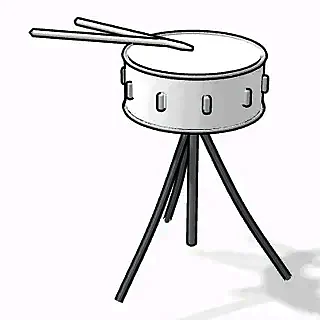
- Percussion: a louder stroke, from a slightly higher stick height.
How strong?
An accent is relative to its surroundings. In a pianissimo passage, an accent might only be a gentle lean; in fortissimo, it’s a real hit. It usually means less than a marcato (^) or a sforzando, though how much less depends on the style and the composer.
Common confusions
- A small diminuendo hairpin. A hairpin stretches across one or more notes and means getting softer. An accent is short and sits on one note.
- Metric accent. Musicians also say “accent” for the natural weight of a strong beat, like beat 1 in 4/4. That’s not marked; the > sign is something extra on top of it.
- Accent and marcato. Both stress the note; the marcato is usually heavier and often shorter.
Marking it on your score
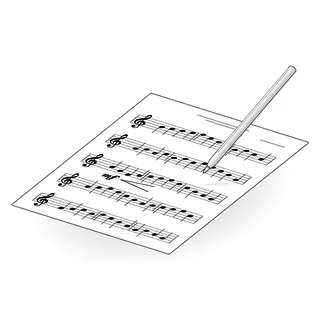
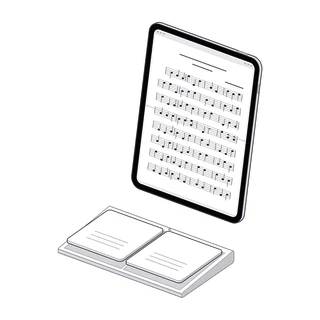
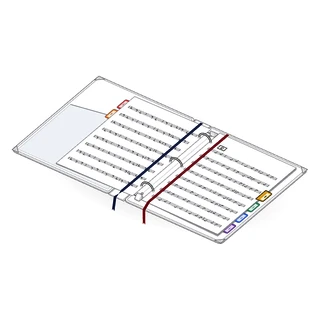
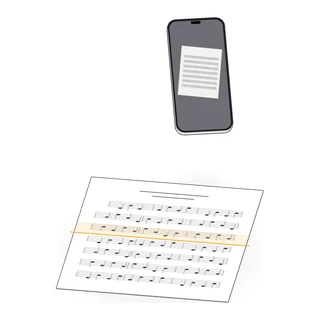
The accent is one of the most common things players add: a printed accent you keep missing, or one your conductor asked for. Write a small > right at the notehead, not between the staves where it could belong to either. In Marcato, the stamp tool’s Articulation group has Accent; tap the note to place it, and keep added accents on a layer of their own if you want to see which ones were yours.