Staccatissimo.
A small wedge or stroke over the note: play it extremely short, shorter than a staccato.
Also called staccato wedge, staccato stroke, wedge.
What it means
Staccatissimo is the superlative of staccato: “very detached”. The note is as short as you can make it while still sounding like a note, with a long silence before the next one. In many styles it also has a little more edge than a plain staccato.
How it’s written
The usual sign is a small wedge, like a filled teardrop, with its point toward the notehead. It sits on the notehead side away from the stem. Some editions use a short vertical stroke instead of a wedge.
How it’s played
- Winds and brass: a very quick, light release. Think of the note as a point, not a line.
- Strings: a short, sharp stroke, off the string at faster tempos, or a quick on-string stroke that stops dead at slow ones.
- Piano: a fast, light release, often from the wrist, with the hand leaving the key almost as soon as it arrives.
- Voice: a very short syllable, kept light so it doesn’t turn into a shout.
A note on older music
In 18th century music, especially Mozart and his contemporaries, wedges and strokes often meant something closer to a plain staccato, sometimes with a slight accent, rather than “as short as possible”. Editors and players still argue about it. If you’re playing Classical repertoire, ask your teacher or conductor how they want those wedges read.
Common confusions
- Marcato. The marcato is an open roof, ^, and means a strong accent. The staccatissimo wedge is filled in and means very short.
- Staccato. A dot asks for a short note; a wedge asks for a shorter one.
- Accent. The accent wedge, >, lies on its side and is about stress, not length.
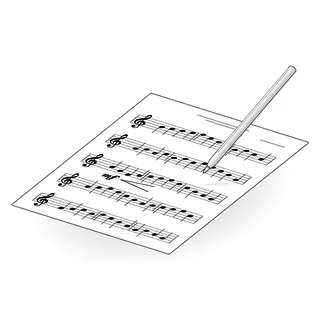
Marking it on your score
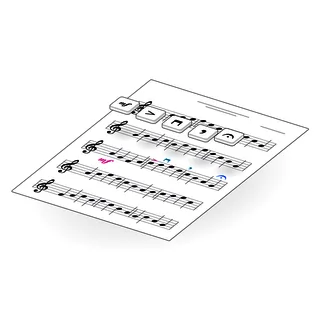
Hand-drawn wedges often end up looking like marcatos, which mean something different. If you add one, fill it in and point it at the note. In Marcato, Staccatissimo sits with the other articulations in the stamp tool, so it reads the same as the printed ones around it.