Mezzo piano.
A bold italic mp: moderately soft, a little louder than piano.
Also called mp, moderately soft, half soft.
What it means
Mezzo is Italian for “half” or “medium”, and piano means “soft”. Mezzo piano is moderately soft: louder than piano, softer than mezzo forte.
How it’s written
The letters mp in bold italic, below the staff in instrumental music and above it in vocal music.
On the dynamic scale it’s the step below the middle:
ppp, pp, p, mp, mf, f, ff, fff
How it’s played
Mezzo piano is a comfortable, relaxed quiet. It’s the dynamic of a gentle accompaniment, a calm melody, or a passage that’s soft without being hushed.
- Winds and brass: a relaxed, full tone with steady support. No need to hold back the sound the way you would at pp.
- Strings: a moderate bow weight and speed, usually a little closer to the fingerboard than at mf.
- Piano: a gentle touch with a singing tone.
- Voice: a warm, natural sound with no strain.
mp and mf
The two middle dynamics are easy to blur together, especially in a group. Mezzo piano should sound clearly softer than mezzo forte; the difference matters most when a composer moves between them. In practice, many ensembles drift to a default somewhere around mf. Listening for real contrast between mp and mf is one of the quickest ways to make a performance sound shaped.
Common confusions
- mp means quiet enough not to matter. It doesn’t. A melody at mp is still the melody.
- mp is the same in every piece. Dynamics are relative to the style, the hall and the ensemble. Mezzo piano in a big band chart is not the same as in a string quartet.
- Reading “m” as “more”. Mezzo means half or medium. mp is a little louder than p and clearly softer than mf.
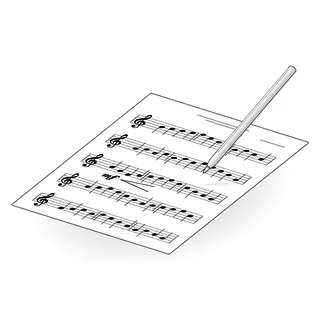
Marking it on your score
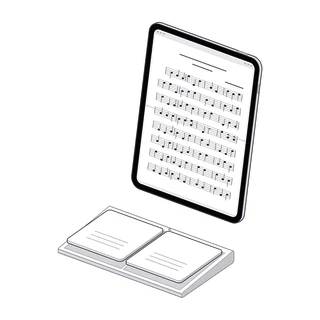
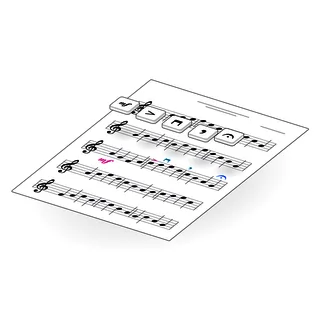
If your section keeps playing mp at mezzo forte, circle it. To add one, write mp where the change begins. In Marcato, Mezzo Piano is in the stamp tool’s Dynamics group; tap the spot under the staff to place it, then nudge it with the lasso so it lines up with the note.