

Mezzo forte.
A bold italic mf: moderately loud, a little softer than forte.
Also called mf, moderately loud, half loud.
What it means
Mezzo means “half” or “medium”, and forte means “loud”. Mezzo forte is moderately loud: louder than mezzo piano, softer than forte.
How it’s written
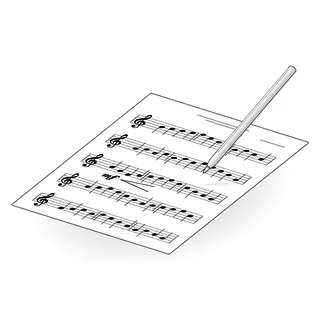
The letters mf in bold italic, below the staff for instruments and above it for voices.
On the dynamic scale it’s the step above the middle:
ppp, pp, p, mp, mf, f, ff, fff
How it’s played
Mezzo forte is a full, confident, natural sound: the volume of a clear melody that doesn’t need to fight to be heard. Many players think of it as their “normal” playing level, which is both useful and a trap (see below).
- Winds and brass: a full, supported tone without pushing.
- Strings: a moderate to full bow, at a normal contact point between the bridge and the fingerboard.
- Piano: a round, singing tone with natural arm weight.
- Voice: a comfortable, ringing sound.
- Percussion: medium stick heights.
The mf trap
Because mf feels like the default, ensembles tend to pull every dynamic toward it: the piano passages creep up, the forte passages never quite arrive. The result is a performance with no contrast. Treat mf as a level like any other, and make it clearly different from both mp and f.
Common confusions
- mf and mp mixed up. The f is for forte: mf leans loud, mp leans soft.
- mf when no dynamic is written. Some players assume mf at the start of a piece with no marking. It’s a reasonable guess, not a rule; the style and the ensemble decide.
- mf and f sound the same. They shouldn’t. Forte should be noticeably bigger.
Marking it on your score
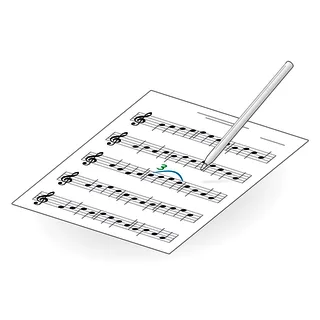
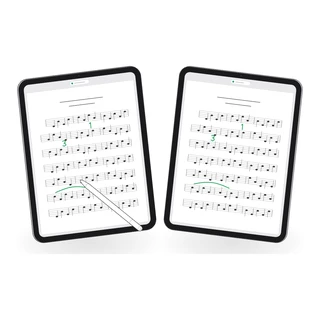
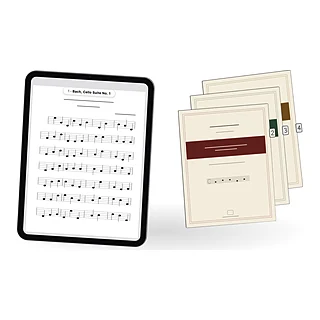
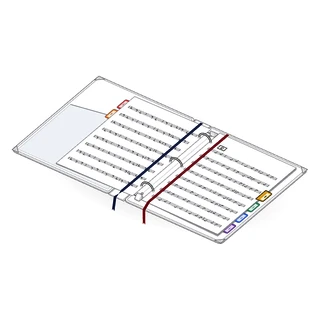
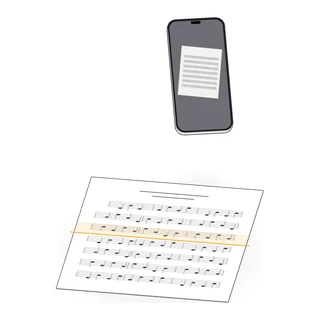
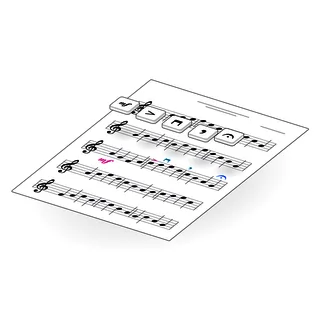
Write mf below the staff at the exact note where it starts. If the score changes dynamic often, a circled mf on the line where you keep missing it helps more than another letter in the margin. In Marcato, Mezzo Forte is in the stamp tool’s Dynamics group, so it reads exactly like the printed dynamics around it.