
Diminuendo.
A closing hairpin (>) or dim.: get gradually softer.
Also called dim., decrescendo, decresc., hairpin.
What it means
Diminuendo is Italian for “diminishing”. It asks you to get gradually softer over a stretch of music. Decrescendo means the same thing.
How it’s written
Two ways:
- A hairpin: two lines that start apart and close to a point, like a stretched >. It begins where the fade starts and ends where it arrives. Under the staff for instruments, above it for voices.
- The word: diminuendo, dim., decrescendo or decresc., often followed by dashes. Common additions: poco a poco (“little by little”) and al niente (“to nothing”).
A dynamic at the end usually shows the destination, like dim. to pp.
Diminuendo or decrescendo?
In practice, the same. A few musicians argue for small differences in shading, but most teachers, conductors and style guides treat them as synonyms. Use whichever is printed.
How it’s played
- Pace it. Like a crescendo, the softest point should be at the end, not halfway through.
- Keep the support. The sound gets smaller, not weaker. Winds and singers especially need to keep the air steady while it gets softer, or the pitch sags.
- Keep the tempo. Softer pulls most players slower. A diminuendo is not a ritardando unless the music says so.
- Strings: less weight and a slower bow, often drifting toward the fingerboard.
- Piano: each note slightly lighter than the last; lift the pedal with care so the fade isn’t cut off.
- Voice: keep the vowel and resonance alive as the sound shrinks.
Common confusions
- Ritardando. That’s getting slower. Diminuendo is only softer.
- Morendo and calando. Both mean dying away, usually softer and slower. Diminuendo alone is only softer.
- Accent. A very short closing hairpin on one note can look like an accent. The hairpin spans notes; the accent sits on one.
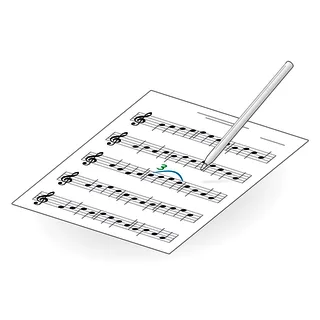
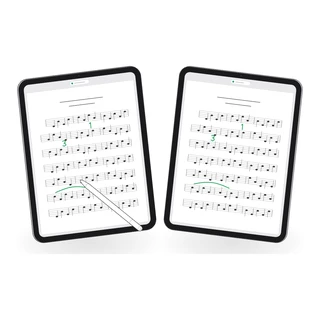
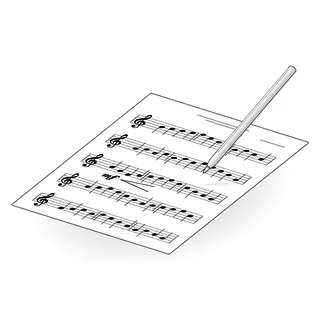
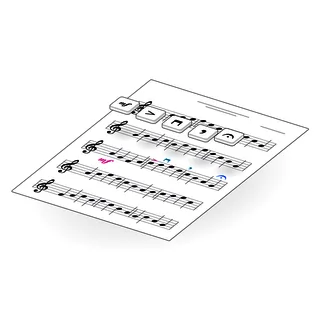
Marking it on your score
Draw the hairpin from the note where the fade begins to the note where it lands, with the target dynamic at the end. In Marcato, Diminuendo is in the stamp tool’s Dynamics group; place it where the fade begins and size it with the handles, or draw it by hand and let ink cleanup engrave it. Write it on the same layer as your other dynamics, so you can hide them all from the Layers menu once they’ve stuck.