Breath mark.
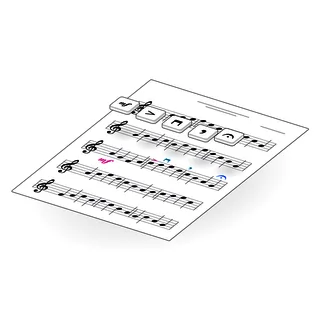
A comma or check mark above the staff: take a breath, or a small lift, at that spot.
Also called breath, luftpause, comma, lift.
What it means
A breath mark shows where to breathe. For singers and wind players, it’s literal: take air here. For strings, piano and percussion, it means a small lift: a moment of silence that separates two phrases, the way a breath would.
The German word Luftpause (“air pause”) is also used.
How it’s written
The usual sign is a small comma above the staff, placed after the note where the sound stops. Many musicians also use a check mark (✓) or a small V, especially when writing breath marks by hand.
How it’s played
The breath takes its time from the note before it, not from the note after. Shorten the last note a little, breathe, and come in on time. The beat keeps going; the breath fits inside it.
- Singers: a quick, low breath through the mouth, ending the word cleanly before it. A breath in the middle of a word is almost always a mistake.
- Winds and brass: a fast top-up rather than a full breath, unless the next phrase is long.
- Strings: lift the bow, often with a retake (bringing the bow back to the frog for another down-bow).
- Piano: lift the hands and the pedal briefly, so the phrase ends clearly.
A breath mark isn’t a fermata. It doesn’t stop the time, unless the music or the conductor says so.
Common confusions
- Caesura. A caesura (//) is a full stop in the sound, often with a short pause in the time. A breath mark is lighter and stays in time.
- Up-bow. A handwritten V for a breath can be mistaken for an up-bow. In string music, use the comma for breaths so the V only means the bow.
- Phrase endings. Not every phrase ending is a place to breathe. Composers and conductors mark the ones they want.
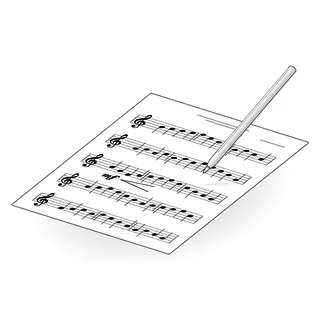
Marking it on your score
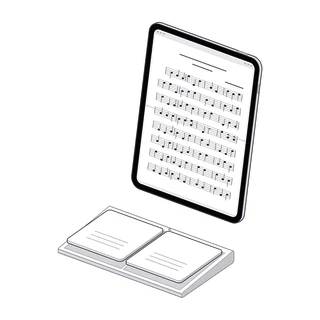
Breath marks are among the most useful things singers and wind players write in. Put the mark exactly where the sound stops, after the last note of the phrase, and above the staff where you’ll see it. Some players also mark “no breath” with a small arrow or a long slur over the spot. In Marcato, the stamp tool’s Bowing & Breath group has Breath, the comma, so every breath in your score looks the same and reads at a glance.